A lot of families moving from the US, Canada and the UK end up in Mexico, and it's easy to see why. It costs a lot less than most western countries, the weather and the food are excellent, people love children, and the time zones line up with North America, so remote work is simple.
It also has real complications that some families don't take seriously enough before they get there. We live in Europe now, but we coach families moving all over the world, and Mexico comes up constantly. So here's the honest version.
Which Mexico are you moving to?
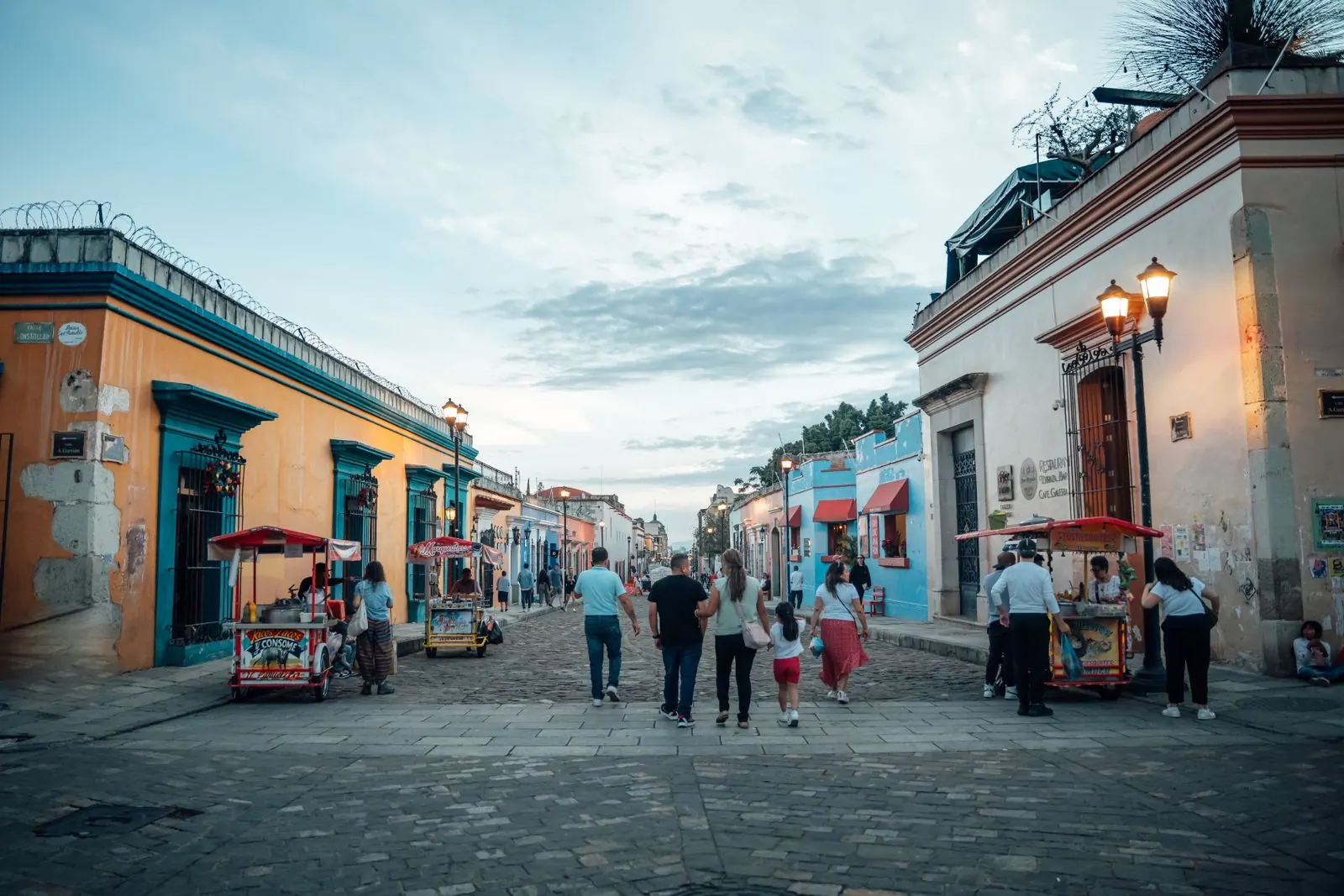
This is the question that matters most, and people skip it all the time. Mexico is huge and very varied. Mexico City is a vast metropolis with world-class restaurants, culture and infrastructure. Oaxaca is smaller, artsy and cheaper, and runs at a completely different pace. Puerto Vallarta and the Riviera Maya are resort areas with big expat communities and higher prices. San Miguel de Allende is popular with retirees and artists. Mérida, in the Yucatán, is warm and affordable, and a lot more expats have moved there in recent years.
Costs, safety, schools and social life are different in each one, and so is the feel of the place. The families who've done well in Mexico nearly always picked somewhere after thinking hard about the kind of life they wanted. They didn't just aim for "somewhere in Mexico."
Best cities for families
These are the places families ask us about most, and what you give up with each.
Mexico City
The most international schools, the best hospitals and more culture than you'll ever get through. Roma, Condesa, Polanco and Coyoacán are popular neighbourhoods with international families. The downsides are traffic, air quality and higher rents in the areas most families want.
Mérida
Often the first city we suggest families look at. It's in Yucatán state, which the US State Department puts at its lowest advisory level. It's affordable, the international community is growing, and it's a real Mexican city rather than a resort. It's also very hot for much of the year.
Oaxaca
Beautiful and creative, and the food is outstanding. There aren't many international schools, so it works best for families who homeschool or are happy with local schools.
San Miguel de Allende and Querétaro
Highland climate, colonial streets and long-established expat communities. San Miguel skews older, so check there are enough families with kids your children's ages.
Playa del Carmen and the Riviera Maya
Beaches, international flights and a large foreign community. Costs are closer to Mexico City than to Mérida, and people come and go more.
What it really costs
Mexico is cheap by US or European standards. It's not as cheap as people sometimes imagine, though, and the gap is closing in the most popular expat areas.
Here are the three Mexican cities in our cost-of-living calculator. They're our own estimates for a family of four, in US dollars per month, put together from Numbeo, Expatistan, the International Schools Database and expat forums. Use them to compare, not as a quote.
| City | Rent (3-bed) | Groceries | Healthcare | Int'l school (1 child) | Total incl. school & childcare | Total excl. school & childcare |
|---|---|---|---|---|---|---|
| Mexico City | $1,000 | $400 | $150 | $800 | $3,250 | $2,050 |
| Playa del Carmen | $1,000 | $450 | $150 | $700 | $3,190 | $2,140 |
| San Miguel de Allende | $900 | $400 | $140 | $600 | $2,810 | $1,910 |
On the same basis, the calculator puts Valencia in Spain at $4,100 and Lisbon at $4,680. Put your own rent and school choices into the calculator. Those two numbers decide whether Mexico is "a bit cheaper" or "dramatically cheaper" for your family.
International school fees and private healthcare are the two costs that catch people out. Budget properly for both and the numbers usually still come out better than at home.
Residency and visas
This is a high-level overview, not legal advice. Each Mexican consulate publishes its own figures (they convert from pesos at their own exchange rate), and the rules change. Check the website of the Mexican consulate you'll apply through, and think about using a qualified immigration lawyer. Our family visa guide covers how to think about the options.
Temporary Resident Visa (economic solvency)
Most families moving to Mexico use this one. It's for people planning to stay more than 180 days and up to four years. You prove economic solvency in one of two ways. The amounts are now worked out from Mexico's UMA (a reference unit), which is MXN 117.31 a day for 2026:
- Income: net monthly income from employment or a pension of 680 times the daily UMA (about MXN 79,771, roughly US$4,400) over the last six months, or
- Savings or investments: an average balance of 11,460 times the daily UMA (about MXN 1,344,373, roughly US$74,000) over the last twelve months.
Because every consulate converts at its own rate, the dollar figures move around. The Consulate General of Mexico in San Diego, for example, lists US$4,049 a month in income or US$68,241 in savings for 2026.
Family members cost extra. Each spouse or child adds 220 times the daily UMA (about US$1,434) to the requirement, using the same type of means as the main applicant. You can't use income for one person and savings for another.
The two-step process
First you apply at a Mexican consulate outside Mexico. If you're approved, you get a visa in your passport. Then, within 30 days of arriving, you have to go to the INM (immigration office) in Mexico and swap it for your actual residence card. This is the part that confuses people, and it causes problems if they haven't planned for it.
Permanent residency
After four years as a temporary resident with continuous, regular status, you can apply for permanent residency. Permanent residents can live and work in Mexico indefinitely. If your status lapses, the four-year count starts again.
One more thing. If you enter Mexico as a tourist and later want to switch to residency from inside the country, it gets complicated. Apply at the consulate before you travel, and don't count on sorting it out once you're there.
Schools
Mexican public schools
Public schools teach in Spanish and follow the national curriculum set by the Secretaría de Educación Pública (SEP). Quality varies a lot by area. For younger children who are happy to learn Spanish, a good local school can be a lovely way into the community. For older kids with no Spanish, it's a much bigger jump.
Private bilingual and international schools
These are common in the cities where international families settle. In Mexico City, the International Schools Database lists fees from roughly MXN 121,300 to MXN 353,800 a year. A few examples:
- Lycée Franco-Mexicain: MXN 121,300 to 209,800 (2026/27)
- Modern American School: MXN 138,000 to 240,500 (2025/26)
- The American School Foundation: MXN 278,100 to 353,800 (2026/27)
Plenty of schools don't publish fees, so you'll have to ask. Outside Mexico City the options thin out fast, which is one reason families often end up picking a city because of a school.
Homeschooling
Legally it's a grey area, but lots of families do it. The constitution says children must be educated, and there's no federal law on homeschooling. HSLDA describes homeschooling as "flourishing legally" because there are no clear compulsory attendance laws, and families generally homeschool without the government getting involved. If you might go home or move on later, keep good records and think about an accredited distance-learning programme. Our post on homeschooling abroad without being a teacher covers the day-to-day side.
Healthcare
Private healthcare in Mexico's big cities is good and much cheaper than in the US. Most international families see private doctors, use private hospitals and carry private health insurance.
The public IMSS system is set up around people paying in through a job. Foreign residents can enrol voluntarily. From March 2026 the fee is charged per person and goes up with age, from about MXN 9,300 a year for under-20s to MXN 22,150 for over-80s, so add it up for each person in your family. But it excludes people with several pre-existing conditions (including cancer, chronic kidney failure and serious heart disease), payments aren't refundable, and cover starts the month after you register. It can be a handy backstop. Don't make it your only cover.
Our guide to healthcare when moving abroad with kids explains how to choose an international policy and what to check before you sign.
Safety
Mexico's safety reputation is mixed, and it depends heavily on where you are. The headline crime figures come mostly from cartel violence, which is concentrated in particular regions.
As of mid-2026, the US State Department rated six states at "Do Not Travel": Colima, Guerrero, Michoacán, Sinaloa, Tamaulipas and Zacatecas. Yucatán and Campeche were at Level 1, "Exercise Normal Precautions", the lowest level. Mexico City, Quintana Roo and Querétaro were at Level 2. Guanajuato (home to San Miguel de Allende) and Jalisco (Puerto Vallarta) were at Level 3, "Reconsider Travel". These advisories are reissued regularly, so check the current version from your own government before you decide.
What we tell families is to research the neighbourhood, not the country. A country-level rating is where you start, not where you finish. Talk to families who live in the area you're looking at right now, and visit before you sign a lease.
Your first month in order
Our first 90 days checklist has the full version. In Mexico, the first month usually goes like this:
- Book your INM appointment straight away. You have 30 days from entry to swap your visa for your residence card, so don't leave it until week three.
- Get a Mexican phone number. Banks, schools and landlords will all ask for one.
- Sign a proper rental contract. You'll need proof of address for the bank and for school enrolment.
- Open a bank account once you have your residence card. Until then, use a multi-currency card.
- Enrol the children in school, or set up your homeschool routine and records.
- Check your health insurance works locally, and find a paediatrician and the nearest good private hospital before you need them.
- Find your people. School parent groups, sports clubs and local family WhatsApp groups are where the useful information is.
What surprises families most
How warmly people treat children. Family is at the centre of everything in Mexico, more than in northern Europe or North America. Kids are welcome in restaurants late into the evening. Strangers chat to your kids, give them sweets and wave at them from passing cars. Family life just feels easier.
The bureaucracy. It isn't as bad as in some European countries, but it isn't smooth either. Bank accounts usually need a Mexican phone number and proof of address, and proof of address needs a rental contract, and so on. That chicken-and-egg problem in the first month is annoying, but you can solve it if you know it's coming.
The food. Obvious, maybe. But the fresh produce, the street food and the home cooking are excellent, and if you let them, they'll widen what your family eats a lot.
What we'd do
If we were planning a move to Mexico with children, we'd start with the visa maths. Work out your family's total requirement with each child added, check it against your consulate's published figures, and decide whether you're applying on income or savings.
We'd pick the city on schooling and safety first and lifestyle second. In practice that usually means Mexico City for school choice, or Mérida for a calmer, cheaper life with a decent international community.
We'd also start learning Spanish before leaving, all of us. You don't need to be fluent. Even basic Spanish changes how fast the kids settle at school, how easily you deal with landlords and officials, and how welcome you feel in the neighbourhood. In our experience, language is the single biggest factor in whether a place starts to feel like home.
We'd rent short term for the first couple of months and use that time to walk neighbourhoods at school-run time and after dark. And we'd have private health insurance in place from day one instead of relying on IMSS.
Mexico suits some families really well. The ones who do best picked a specific place for specific reasons.
If Mexico is on your list and you want to talk through your own situation, we'd love to help.
Sources
- Temporary Resident Visa, Economic Solvency (2026), Consulate General of Mexico in San Diego (PDF)
- Financial criteria for residency in Mexico (Mexperience)
- Visa de Residencia Temporal (Consulate of Mexico in Presidio)
- Permanent residence in Mexico after four years as a temporary resident (Vega Guerrero)
- International schools in Mexico City (International Schools Database)
- Homeschooling in Mexico (HSLDA)
- Homeschooling international status and statistics (Wikipedia)
- Incorporación voluntaria al IMSS 2026 (El Imparcial)
- Most dangerous states in Mexico 2026: travel warning map explained (LATAM Travellers)
- US State Department Mexico travel advisory (check the current version)
- Roamsmith cost-of-living calculator (our estimates, last updated February 2026)
